The Cost of Digital Ownership
Thinking through the implications of software moving toward subscription as a service, piracy as a response to digital rights management, and the sustainability of free open-source software for the developer.
The last few years I have begun to try and escape from subscription service models. Spotify was the first subscription I ever paid for. For the price of half a CD a month I could access pretty much every song ever produced. You can trace the growth of subscription-based business models through the likes of Netflix in 1999 (back when they send DVDs through the mail), Spotify in 2006, Dropbox around 2008, Adobe switching to software as a service (SaaS) in 2012, and Microsoft’s GamePass in 2017. I’m sure the list is much longer but these were the ones that stood out.
The ugly side of subscriptions comes down to a lack of license. Subscriptions sell access not ownership. And despite the years of investment that I may give a company, that access can be revoked at any time. In the last 20 years we’ve seen our software and files shift from being on our computer or a flash drive to being in “the cloud”. Even some software such as SketchUp can no longer be downloaded on your computer but has to be run from the web. Centralized technology leads to convenience at the cost of control.
Recently, an agreement between Warner Bros Discovery and Sony Playstation ended that left customers who had purchased access to Discovery content through the Playstation store unable to view the content1. Tough luck. Even purchases within these platforms is still only the purchase of access and not ownership. If you look around, digital rights management (DRM) is all around us. Movies bought from Apple can be downloaded to your computer (in lower quality) but only played through iTunes. Audiobooks bought on Amazon can be downloaded from their website but can only be listened to on authorized devices. Video games bought on Steam can only be played with Steam installed.
If I were asked to answer the following question: What is slavery? and I should answer in one word, It is murder!, my meaning would be understood at once… Why, then, to this other question: What is property? may I not likewise answer, It is theft!…? – Pierre-Joseph Proudhon
I recently came across this quote from French anarchist, Pierre-Joseph Proudhon. I just want to say, my knowledge of 19th-century French philosophy is extremely limited so take my 5 minutes of Wikipedia research this with a grain of salt. Proudhon’s main critique of property seems to be of centralized ownership by the elite. Is it too much a stretch to apply anarchist philosophy from 200 years ago to digital content today? Maybe. But I’ve also started hearing people with arguments strangely similar to Proudhon. The main logic being used is, “If buying isn’t owning, piracy isn’t stealing.” I haven’t been able to track down the exact origin of this quote.
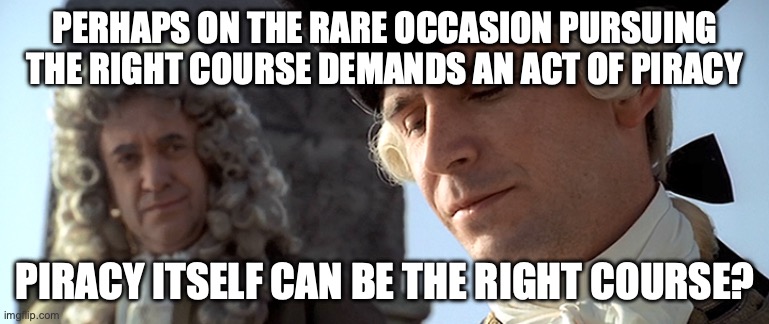
Unfortunately, piracy is still piracy despite the occasion. The onus is on us as the consumers to limit what we support to ensure ownership. Or, at the very least decide which things are too valuable not to own. This is a very broad and subjective topic so I want to limit the current discussion to software and the importance of free, open-source software (FOSS).
FOSS is best described by its four main principles or “freedoms”:
- the freedom to run the program in any way and for any purpose
- the freedom to alter the program any way you would like
- the freedom to redistribute the original program to anyone
- the freedom to distribute the altered program to anyone
If you Google “free open source software” you will find a list of well-known software such as Audacity, Blender, Firefox, GIMP, LibreOffice, and VLC Media Player. Even just this list, which is just a tiny sliver of what is available, is quite impressive. The fact that groups of people would dedicate their time (often their free time) is astounding. Why their free time? You may have seen the rub. When everything is free how do you support yourself and development?
The strength of FOSS is also its greatest weakness. Being able to use and modify software without any constraints would seem to be the epitome of ownership… for the consumer. But when everyone owns a piece of software you begin to realize that no one does. FOSS developers mainly make money off their projects through donations. A good example of this is Wikipedia that, while free is not open source, has banners asking for donations from the users. Another way is through open and paid tiers of the software. GitLab offers this model with an open core product and several enterprise tiers with additional features2. Both of these methods are dependent on a large enough audience and demand which makes starting out extremely difficult. And even with a large demand, most FOSS developers depend on other income.
Digital ownership has a cost and attempting to avoid this cost is inherently unsustainable. Piracy of a product can only exist as long as there are people paying for the product. But a FOSS product can also only exist while there are people investing their time and energy into the product. In both cases, trying to avoid cost as the consumer can lead to exploitation of the producer. In avoiding one cost, you may end up paying one far greater. The question to ask yourself is, what is the cost of ownership worth to you?